Blockchain 101
Blockchain, cryptocurrency, and their architectures
Ref: https://blog.goodaudience.com/blockchain-for-beginners-what-is-blockchain-519db8c6677a
Blockchain
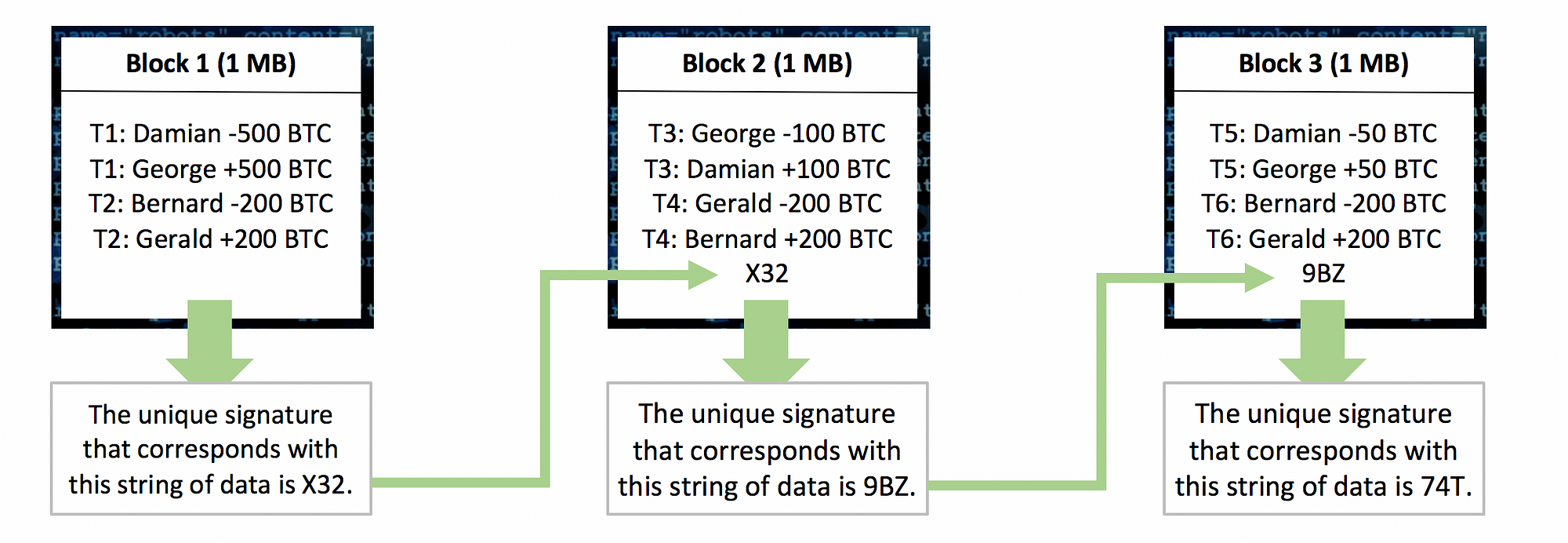 Can be viewed as a ledger - distributed database - chain of data blocks
- Immutable
- Can be either public (bitcoin) or private
Why is it needed?
Blockchain supports cryptographic verification of transactions which are immutable. This removes the need of a trusted third party such as banks in most transactions today.
How is it immutable?
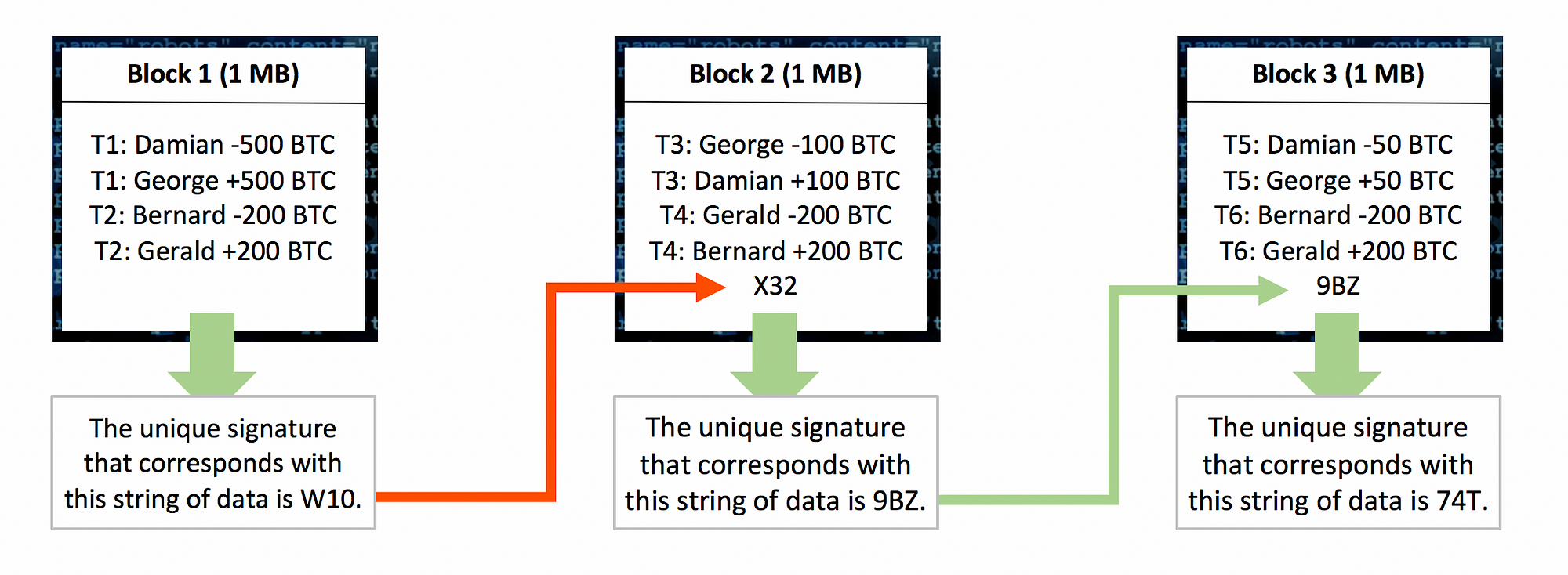
Any change to the chain need to be accepted by all participants in the network (e.g. through majority voting of longest chain!). Modification to a block would requires modification to all subsequent blocks, including new blocks. Since other miners are also modifying these block (i.e. by adding nonce), unless the changes happen faster than the rest of the network (which requires significant more computational power - 51% attack), the modification will be rejected by other changes in the network. Additionally, once this happens, the creditability of the blockchain loses its value, which means the gained benefit loosed its value. So there is not much incentive in doing so.
What does it store?
Generally, it can store anything, but mostly contracts, entitlement records (e.g. property ownership paper), or transactions such as money transfer. For examples, bitcoin blockchain contains bitcoin transactions.
Nodes and master nodes
What nodes do?
- Check if a block of transactions is valid and accept or reject it
- Save and store blocks of transactions (i.e. blockchain transaction history)
- Broadcast and spread this transaction history to other nodes that may need o synchronize with the blockchain
Node: there are partial nodes, which have partial transaction history, and full nodes, which have full copy of the transaction history. Miners need full node in order to select valid transactions to form a new block. Master node: in additions to validating, saving and broadcasting transactions, master nodes facilitate other events: governing voting events, executing of protocol operations, enforcing the laws of according blockchain.
Cryptocurrency and mining process
Cryptocurrency is stored in digital wallets. Wallet contains private and public keys which are used to sign transactions. Transactions are put into a local pool of unconfirmed transactions. Miners select transactions from these pools to form a block of transactions.
Why are there different blockchains or cryptocurrencies?
Other cryptocurrencies are altered form of Bitcoin. Most cryptocurrencies are built upon their own blockchain protocol which may have different rules from the Bitcoin blockchain. For examples, Ethereum introduces “smart contract”. “Smart contract” is stored in nodes' cache. The “smart contract”’s result is stored in the Ethereum’s blockchain.
Blockchain Use Cases
Finance
Mortgage Lending Cross-border payments Know Your Customer (KYC)
Retail
Product recalls Counterfeit Products Loyalty Programs
Media
Ownership rights Ad tracking and validation Royalty management
Healthcare
Pharmaceutical supply chain Claims management Electronic Medical Records
Government
Identity management Regulation & Compliance Voting
Manufacturing
Parts Tracking Contract Management Data Exchange
Technical details and reference architectures
Block
Bitcoin block exist of approximately 1MB of data each.
Chain
Each block contains data, signature value (e.g. through cryptography hash function - produces 64-digit string) of the previous block, and a random string of numbers (nonce). Signature value of the current block takes account the content (including previous block signature, and nonce) in the current block. Therefore, in order to modify content of a block, which changes its signature, all subsequent blocks would need to be modified accordingly as well. Otherwise, those blocks are no longer considered chained. That modification is nearly impossible.
nonce and Mining process
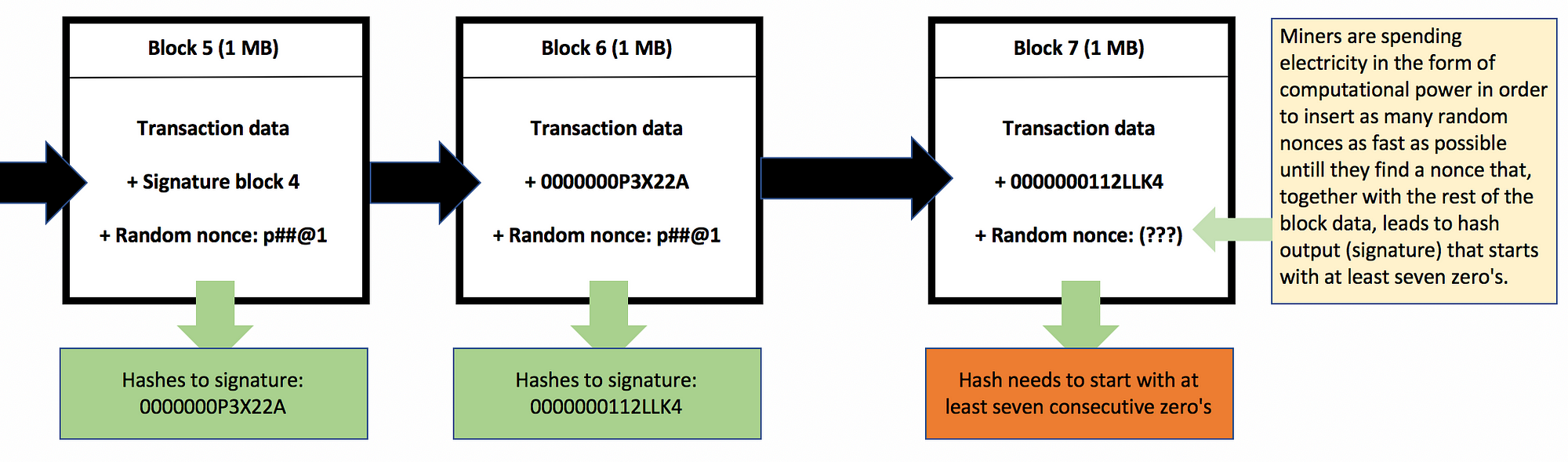
Nonce is a random add-on to ensure the resulted hash value meets certain requirements such as leading 10 0’s. Mining process tries with different nonce values until they found hash value that meets the requirement. This also means officially adding the data block to the chain. This trail and error process costs resource. And that is how they are rewarded with bitcoin (through the blockchain’s protocol)
GCP services
Marketplace
- One console for both blockchain and GCP workload
- Hyperledger Fabric framework
- Ethereum
- Others
Ledger Database
- Fully managed ledger database
- Centralized trusted authority
- Blockchain features: immutable, and cryptographically verifiable transaction log
- Is not a blockchain or distributed ledger technology
Others
Proof of work
Proof of stake/authority
New algorithm focuses on reducing energy required for generating new block
DAO Decentralized autonomous organizations. For examples, company operated by programmable rules
DAPP Distributed applications: application that run on the blockchain - requires no operator - connect app and users directly. For analogy, think of a Twitter application that has no operator. That means no censorship or manipulation of tweets.